
Nursing Services

Any medication to be administered at school, including over the counter, prescription, herbal or homeopathic supplements will require a completed CCSD Medication Permission form completed by an authorized health care provider.
CCSD has full time nurses at all school locations. In the absence of the nurse, staff members who have been trained and documented may administer routine medications, emergency medications, and provide minor first aid according to physicians' orders and district policy. Any special accommodations or treatments will require a signed physician order from. If your child's medical status or contact information changes, it is imperative for you to notify the school nurse immediately and provide the proper documentation. This will ensure safety when providing care for the student at school. All forms can be retrieved from the school nurse as well as in the “Forms and Permissions” section below.
Please do not hesitate to reach out to your school's nurse if you have any questions or concerns. Our goal is to keep your child safe and healthy.
In an effort to help protect well children and staff from unnecessary exposure to contagious or infectious diseases, South Carolina requires that children and staff with certain diseases and conditions stay home from school or childcare while contagious.
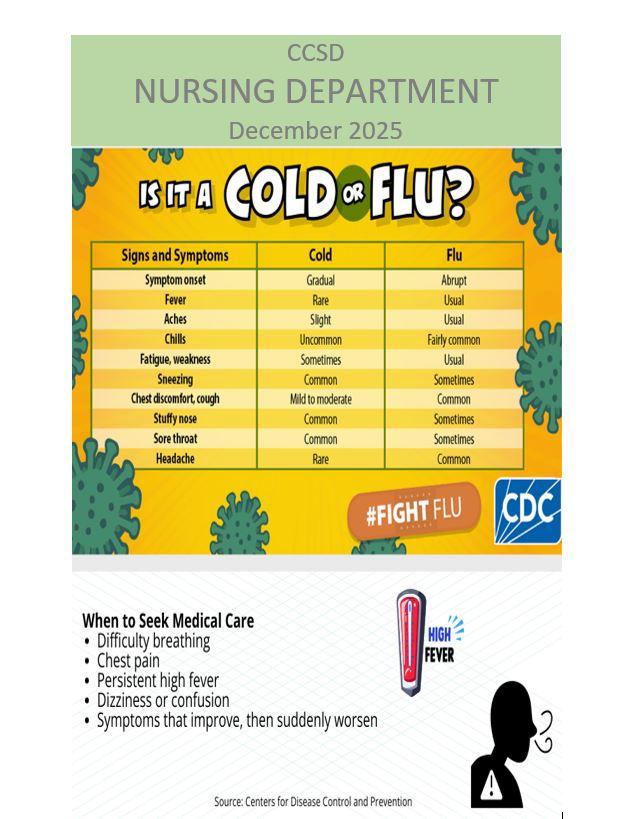
If your child feels too sick to go to school or has an illness that can be spread to others, please keep them home from school/childcare and call your health care provider. Consider the following:
-
Does your child’s illness prevent comfortably taking part in activities?
-
Does your child need more care than the staff can give without affecting the health and safety of other children or staff?
-
Could other people get sick from being near your child?
-
If your child has an oral temperature above 100.4 please stay home from work and school. Do not medicate with fever reducing medicine and go to school.
-
If your child has had more than one episode of vomiting or diarrhea, please keep them home.
Forms and Permissions
-
-
-
-
-
-
To help the School Food Services Department meet USDA Child Nutrition Program requirements for students with special dietary needs, please complete the appropriate enclosed form based on the descriptions below.
For more information, contact Food Services Director, Reba Newton Powers.
- Office: 843-623-2179
- email: rpowers@chesterfieldschools.org
Heart Safety
Chesterfield County School District is committed to maintaining a high level of preparedness for cardiac emergencies. Every school has a team of trained First Responders certified in First Aid, CPR, and AED use on infants, children and adults. First Responders maintain their certification every two years through training classes based on current American Heart Association guidelines.
To further support cardiac emergency preparedness, CCSD has 11 certified CPR instructors who provide First Aid, CPR, and AED training to district employees. Having certified instructors within the district allows CCSD to provide ongoing training and recertification opportunities and helps ensure that trained personnel are available across our schools to respond quickly and effectively during a cardiac emergency. Through continued training, AED readiness, and emergency response planning, CCSD remains committed to providing a safe and prepared environment for students, staff, and visitors.
Project Adam
Chesterfield County School District is committed to improving cardiac emergency preparedness through participation in Project ADAM – Automated Defibrillators in Adam’s Memory.
The Project ADAM Heart Safe School designation recognizes schools that have implemented nationally recognized practices for responding to sudden cardiac arrest. To earn this designation, a school must establish a written Cardiac Emergency Response Plan, maintain accessible and operational automated external defibrillators (AEDs) identify a trained Cardiac Emergency Response Team, educate staff about sudden cardiac arrest, and successfully complete a cardiac emergency response drill.
These measures help ensure that trained personnel can quickly recognize a suspected cardiac arrest, call 911, begin CPR, retrieve and use an AED, and provide care until emergency medical services arrive.
The following schools have earned the Project ADAM Heart Safe School designation:
- Central High
- Cheraw High
- Cheraw Primary
- Cheraw Intermediate
- Long Middle
- Chesterfield-Ruby Middle
Additional CCSD schools are actively working toward designation.
Chesterfield-Ruby Middle
Central High
Cheraw Primary
Cheraw Intermediate
Long Middle
Cheraw High